How Nadler works more efficiently with a central database and AI‑supported processes and accelerates international expansion.

Since 1998, Nadler Strassentechnik GmbH has been one of the leading specialists for building materials, machines and system solutions in road and civil engineering. The company serves over 4,500 customers in Germany and international markets and combines its own product developments, technical expertise and practice-oriented training from the Nadler Academy to form a comprehensive portfolio.

sector: Road and civil engineering, building materials and machinery for road engineering

Company size: Over 80 employees

Sales channels: online shop, two locations in Schweitenkirchen and Barleben as well as Germany-wide sales force and international franchise partners

Project partners: Cosmo Consult (ERP integration, Business Central).

With the planned international expansion and several new Shopify shops, the requirements for a scalable database increased significantly. Product information, technical documentation and country-specific requirements increased significantly and existing processes became more complex and less efficient.
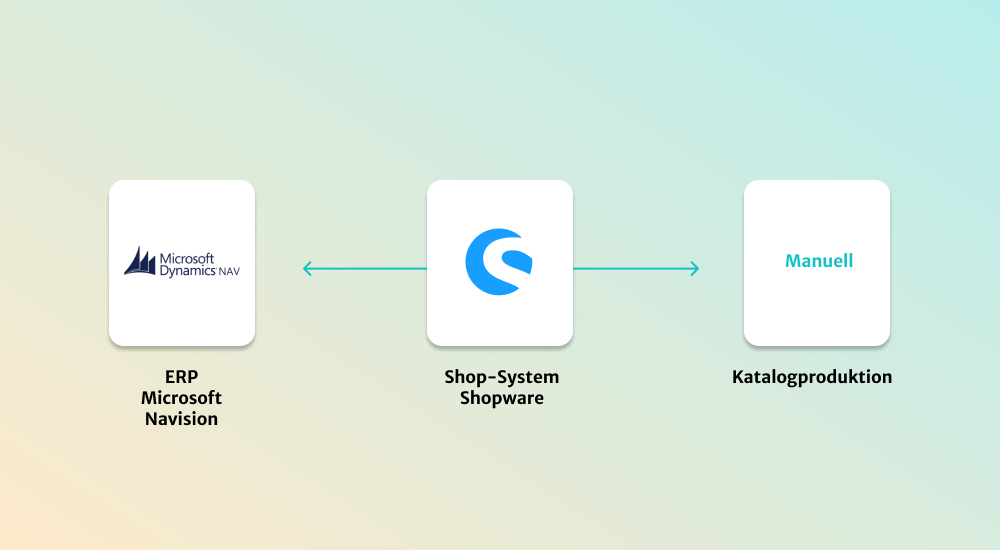
At the same time, various departments worked with different data sources, which led to a lack of transparency and increased coordination efforts. At the same time, it was time to introduce a new ERP system. This was the ideal time to modernize product data management and create a consistent basis for expanding international shops.
Build new international Shopify stores
Scalable data structures had to be created for new country shops. Without a central base, each additional shop instance would have caused considerable additional costs and slowed down international expansion.
High manual effort in product data maintenance
Product information had to be maintained separately for several channels. This led to duplicate work, inconsistent data sets and increasing maintenance costs in marketing and product management.
Decentralized creation of product-relevant documents
Technical data sheets, application notes and other documents were located at various locations. This made coordination more difficult and increased the risk of incorrect versions.
No central access for field staff
The sales force did not have a uniform, always up-to-date information base. This led to inquiries and made day-to-day consultations more difficult.
Together, Nadler Strassentechnik, Cosmo Consult and ainavio defined three central goals for future product data management.
1. Central administration of all product data
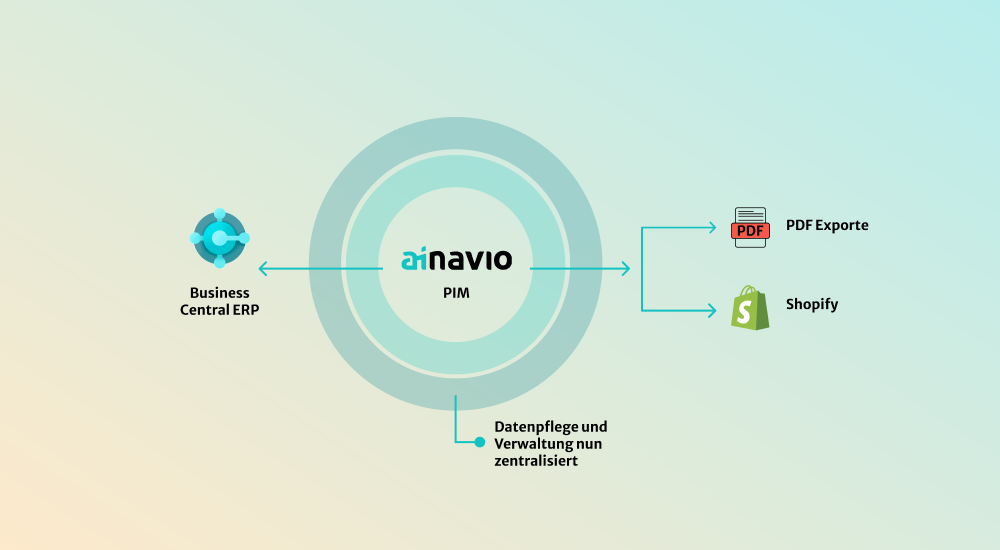
All product-relevant information should be maintained in one place and automatically transferred to all relevant systems and international shops to ensure a reliable and up-to-date database.
2. Reducing manual work through AI automation
Texts, translations and data sheets should be generated automatically. This should reduce maintenance costs and make content available more quickly.
3. Increasing efficiency for sales and marketing
All teams should be able to centrally access current product data at any time. The sales force should be able to use reliable information, while marketing and e-commerce provide consistent content for international platforms.

Saving time in day-to-day business: Central maintenance significantly reduces duplicate entries and significantly speeds up the provision of complete product data for existing and new country shops.
Productivity increase: Marketing, product management and sales can coordinate information more quickly and work together more efficiently because all relevant data is centrally available.
High scalability: Automated translation processes and prepared data structures make it possible to set up new international shops much faster and provide them with consistent content.
Improved availability of information: Product information is always up to date internally, which speeds up processes and reduces inquiries.
Central database for all teams: All product information, technical data sheets, application notes and other documents are consistently available at all times and facilitate internal collaboration.
Consistent content across all channels: Central data storage avoids divergent versions, so that international Shopify shops, B2B and B2C channels receive uniform and reliable information.
Automated creation of recurring content: Translations, texts and data sheets can be generated automatically, which minimizes repetitive tasks and increases the quality of content.
High scalability for new markets: The existing data structure supports expansion into other countries, as new shops can be set up quickly and without additional maintenance costs.
Professional customer communication: Standardised documents and centrally available information facilitate advice in sales and field sales and ensure a consistent approach to customer contact.
The introduction of ainavio PIM has modernized the product data processes at Nadler Straßentechnik. Thanks to the central database, AI-based automation and integration with Business Central, product information is now available more quickly and can be played out consistently across all channels. This significantly simplifies international scaling. At the same time, the central information base makes daily work in sales, marketing and product management easier.
The interplay of ERP and PIM creates a future-proof system landscape. New Shopify shops can be set up faster and the existing data structure provides a stable basis for further automation and international growth.
The next step is to prepare for the rollout of additional international Shopify shops, which are to be introduced successively on the basis of already established data structures and automation processes.