
The HTTP integration connects ainavio to external systems via HTTP-based interfaces, enabling the automated exchange of product data and media.
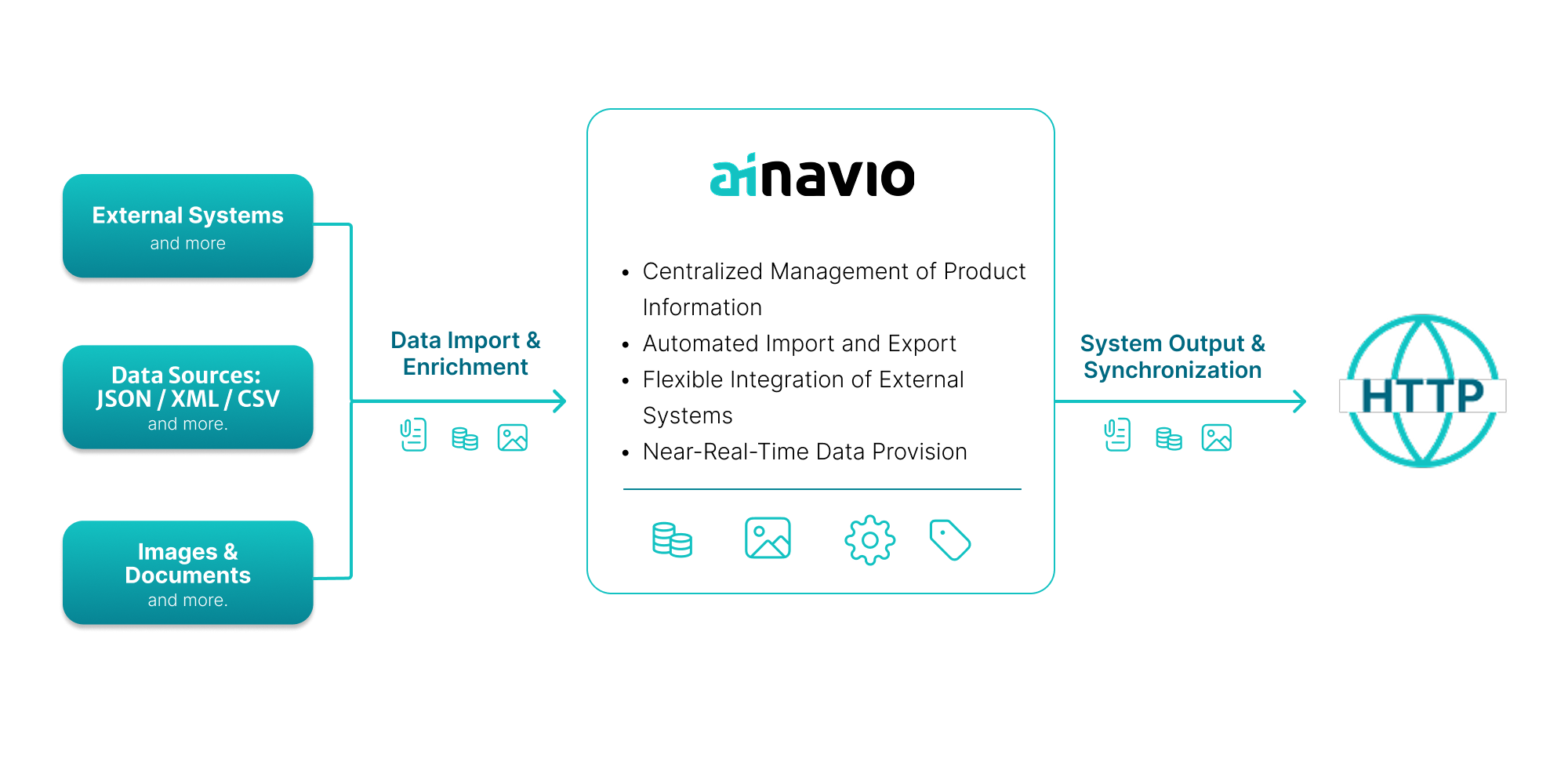
The HTTP integration automates the exchange of product data and media between ainavio and external systems . This allows for flexible connection to existing applications and supports efficient, scalable data processes.

Data exchange via HTTP-based interfaces
Import and export of product data
Transfer of media and documents
Automated data onboarding from external sources
Support for custom integration scenarios
Integration into automated data processes
Flexible connectivity
HTTP enables the connection of a wide variety of systems via standardized web interfaces.
Automated data exchange
Product data can be imported and exported without manual intermediate steps.
Centralized data management
ainavio manages product information centrally and distributes it to connected systems.
Efficient onboarding
Product data from external sources can be imported into ainavio in a structured manner.
Custom integrations
The HTTP interface is suitable for custom integration and automation solutions.
Omnichannel distribution
Once product data has been maintained, it can be distributed to various target systems via ainavio.
The HTTP integration enables the standardized exchange of product data, media, and other information between ainavio and external applications. As a central platform for Product Information Management (PIM) and Digital Asset Management (DAM), ainavio handles data onboarding, management, enrichment, and quality assurance for all product information. Using HTTP-based interfaces, data can be imported from ERP systems, online shops, middleware solutions, or custom applications and exported to connected target systems. This creates automated data flows that reduce manual processes and establish a consistent data foundation. Companies benefit from centralized product data maintenance and reliable omnichannel distribution across various sales channels. The HTTP integration is particularly well-suited for custom integration projects, API-based data exchange processes, and connecting existing system landscapes. In this way, ainavio supports the efficient management, synchronization, and delivery of high-quality product information throughout the entire product lifecycle.
How does the HTTP integration with ainavio work?
The integration uses HTTP-based interfaces to exchange data between ainavio and external applications. Data can be automatically imported or exported and integrated into existing processes.
What data can be transferred via HTTP?
The HTTP integration allows for the transfer of product master data, attributes, categories, as well as media and documents, among other things. The specific information processed depends on the respective interface and its configuration.
How does HTTP support data onboarding?
ainavio can receive product data from external sources via HTTP and integrate it into the central data model. The data can then be validated, enriched, and prepared for distribution to other channels.
Which systems is the HTTP integration suitable for?
The HTTP integration is suitable for systems that can send or receive data via HTTP-based web interfaces. This includes, for example, ERP systems, shop systems, middleware, custom applications, or other platforms with a corresponding interface.